
Full and Empty at the Same Time
On Henri Nouwen, inner integration and the crisis beneath the headlines

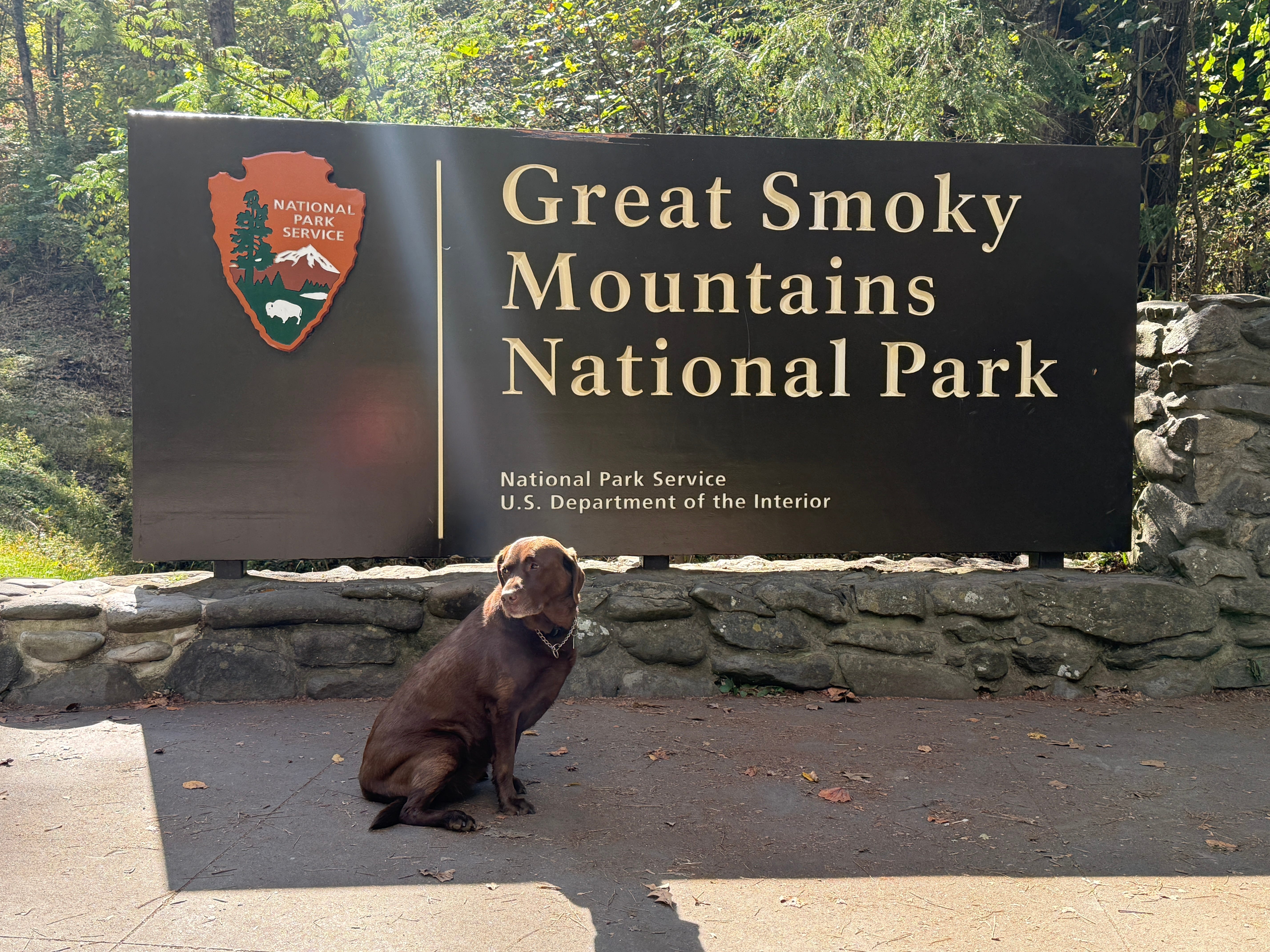
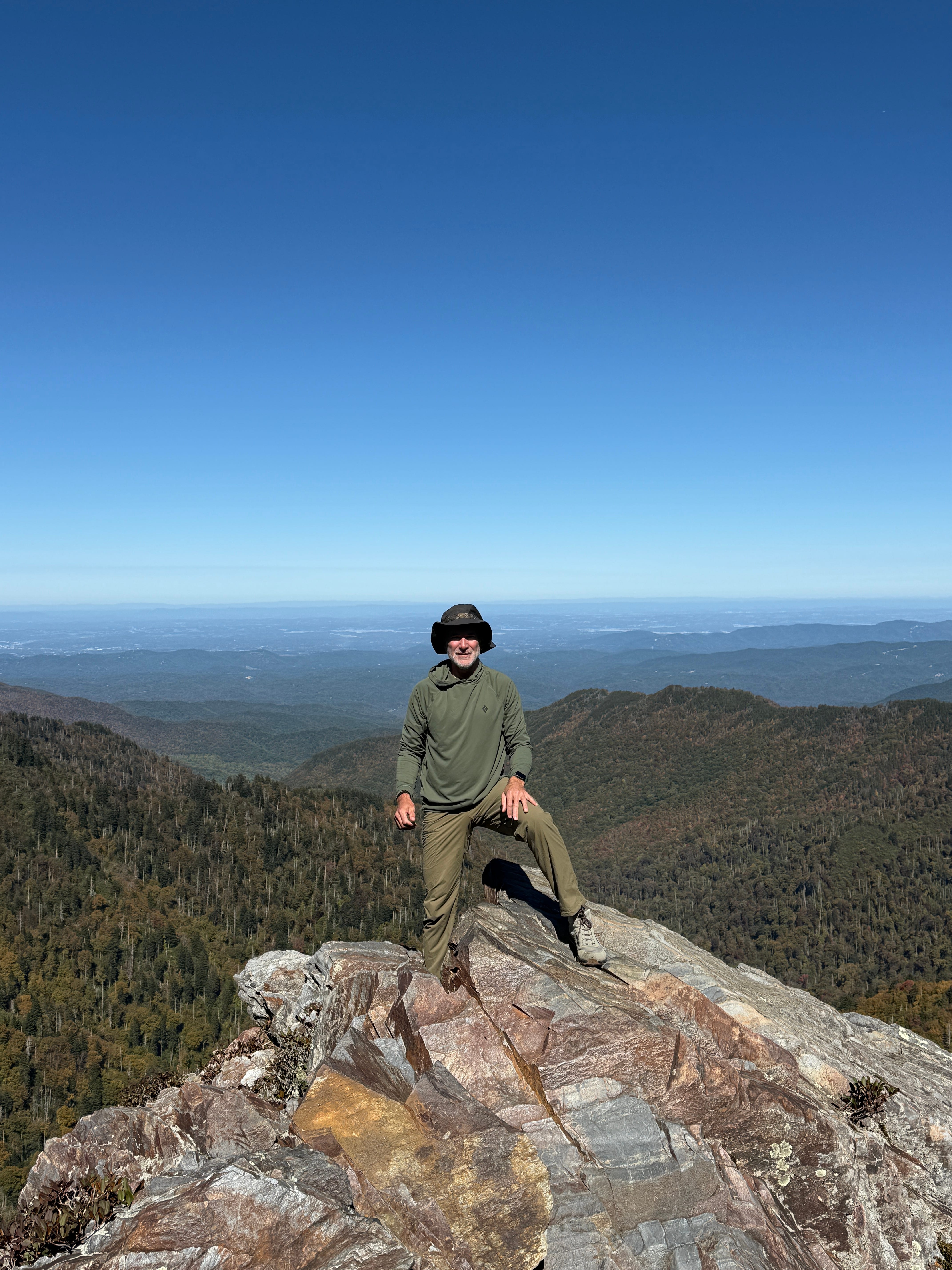
Some time ago, I loaded my chocolate lab Halle into the camper van and headed to the Great Smoky Mountains National Park. The university where I mentored and coached was on break, and I needed to get outside. It was just a few weeks after the devastating Asheville flood, and the park was partially closed — which meant the trails were nearly empty. Each day I pushed myself on long, strenuous hikes through some of the most beautiful terrain I’ve ever walked. Afterward, I’d build a fire and sit with a journal or a book, listening to the silence settle in around me.
For me, nature — and especially places like the Smokies — has become one of the truest places of connection I know. And yet, sitting alone in that peacefulness, I felt strangely hollow. I found myself like George Bailey in the film It’s a Wonderful Life — quietly wondering how different the world would be without me in it. Not in a desperate way. More like a whisper from somewhere I didn’t expect.
I was full and empty at the same time.
I didn’t find this quote by searching for it. It found me — the way the right words sometimes do — through my people. Earlier this week, Chip Conley’s daily Wisdom Well email arrived in my inbox. Chip is the founder of the Modern Elder Academy, a place that has shaped much of my own second-half-of-life thinking. He was reflecting on a conversation with the poet Mark Nepo who had reached for a Henri Nouwen quote to make sense of the world in the wake of the recent Iran bombing:
“I have an increasing sense that the most important crisis of our time is spiritual and that we need places where people can grow stronger in the spirit and be able to integrate the emotional struggles in their spiritual journeys.” — Henri Nouwen1
I read it twice. Then I thought about that campfire. About feeling full and empty at the same time. About George Bailey’s whisper. Nouwen wasn’t describing a crisis out there in the geopolitical world. He was describing the one I’d been feeling internally, without quite having words for it.
That recognition stayed with me. Because if Nouwen’s words could find me through a campfire and an email and a poet’s musings about the state of the world — maybe the crisis he’s naming isn’t just mine.
Full and Empty at the Same Time
Nouwen wrote those words long before the current headlines. But they landed in Mark Nepo’s hands this week because they fit — the way a key fits a lock that’s been waiting. The Iran bombing. The political noise. The exhausting scroll.
We don’t lack information about what’s wrong with the world. What we lack is the inner infrastructure to hold it.
That’s the crisis he’s naming. Not the events themselves, but our growing inability to integrate them — to let what happens out there move through us without either numbing us or breaking us.
I’ve been circling this for a while without quite naming it. A few years ago I wrote about joy — specifically C.S. Lewis’s idea that real joy isn’t happiness, isn’t pleasure, but a deep ache for something we can’t quite name. Lewis called it “an unsatisfied desire which is itself more desirable than any other satisfaction.” What Lewis names as longing, Nouwen names as integration. Both are pointing to the same ache — the gap between our outer lives and our inner ones.
What struck me then, and strikes me more now, is what happens when we can’t sit with that ache. When the longing becomes too uncomfortable, we reach for whatever fills the silence fastest. We stay busy. We stay scrolling. We go to our addictions. We stay at the surface.
We have an address, as Nouwen puts it elsewhere, but we can’t be found there.
I’ve felt this most acutely not in my hardest moments, but in my fullest ones — like that campfire in the Smokies. Everything is externally right. Something is internally unresolved. A belonging that was real, and yet incomplete. I’ve been at music festivals singing with strangers and felt it. I’ve been at the Modern Elder Academy surrounded by fellow seekers and felt it. I’ve been with friends in beautiful places and felt it. Not the absence of community — I had community. What I was missing was integration. The ability to let my emotional reality and my spiritual life actually speak to each other.
That, I think, is what Nouwen means. Not a crisis of faith exactly. Not a crisis of community exactly. But a crisis of wholeness — the gap between the life we’re living on the outside and the spiritual life that’s trying to be lived on the inside.
If you’re reading this newsletter, there’s a good chance you know exactly what I’m talking about.
Spaces for the Whole Self
When Nouwen says we need places where people can grow stronger in the spirit, I don’t think he means physical places. He’s not describing a new program or a better church schedule. He means something more like — spaces where it’s safe to bring your whole self. Where vulnerability isn’t punished but welcomed. Where the emotional and the spiritual aren’t kept in separate rooms. Where you don’t have to perform okayness to belong. In a world that rewards polish over substance, that kind of safety is rarer than it should be. And more necessary than we usually admit.
I’ve been lucky enough to stumble into a few of those. The Modern Elder Academy cracked something open in me around what the second half of life is actually for. The friends I spend time in nature with each year make me feel less alone in my questions. A men’s group I’m part of — a small circle of guys who’ve agreed to show up honestly — has become one of the most unexpectedly sacred spaces in my life. And then there are the solitary practices: the early morning journaling, the long silences, the walks with Halle where I’m ostensibly getting us exercise but really working something out in myself. These aren’t escapes from the world’s weight. They’re the places where I learn to carry it differently.
Not a Space. A Belonging.
I’d like to think this newsletter is one of those places too — small, imperfect, still figuring itself out, which is perhaps exactly right. Wisdom-in-Progress isn’t a title I chose ironically. We’re all mid-process here.
This morning, a Substack writer named Sif Orellana — writing from beside her mother’s hospital bed — put it better than I could. In her beautiful post “They Are Here: My 12 Words for 2026,” she described arriving in the Substack world knowing no one, intending to think out loud, and discovering instead what she called “a community of likeminded, purehearted, wonderfully curious souls.” Not a space. A belonging. People who showed up. People who stayed. That’s the integration Nouwen was after. The invitation isn’t to arrive somewhere. It’s to keep showing up to the integration — to let what’s happening emotionally and what’s stirring spiritually finally sit down at the same table, with others who are willing to do the same.
A Blessing for the Journey
May you find — or build — the community that can hold all of you. Not just the polished, presentable version, but the full and empty version, the George Bailey version, the one sitting alone by a campfire wondering if any of it matters.
May you resist the pull to stay at the surface, and may you find at least one person, one circle, one place where your emotional truth and your spiritual longing are finally allowed to meet.
And may you know, in whatever hollow moment finds you next, that the crisis Nouwen named is not a personal failing, but part of the human condition. And you are not navigating it alone.
A question to sit with:
Where are the communities — the people, the practices, the places — where you are most fully yourself? Most free to be vulnerable? And is there one you’ve been avoiding showing up to completely?
Henri Nouwen was a Catholic priest, and taught at Notre Dame, Yale, and Harvard. He experienced monastic life with Trappist monks, lived among the poor in Latin America, and eventually found his home as pastor of L’Arche Daybreak in Canada, a community where people with intellectual disabilities and their caregivers live together.
If you’re new here: I write about the inner journey, the quest for wisdom, and what it means to live fully in the second half of life. Subscribe to join the conversation.
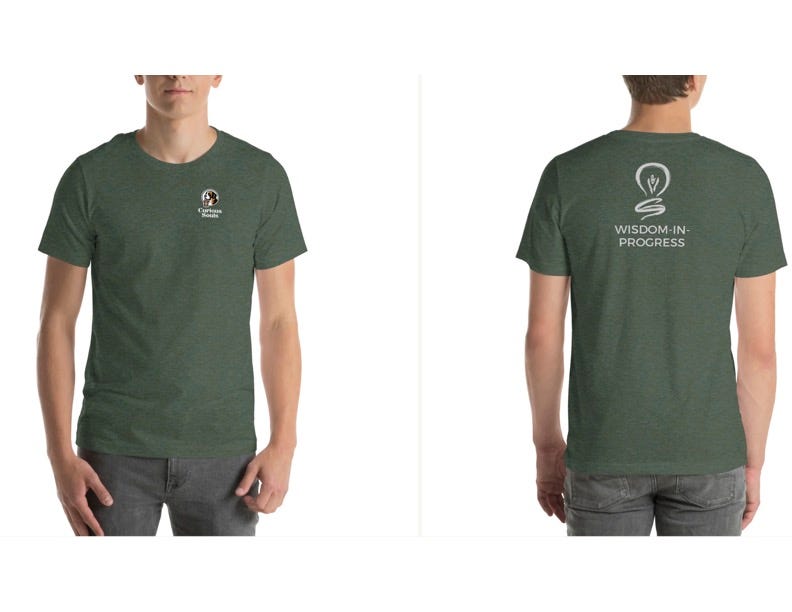
P.S. If you’d like to wear a daily reminder that you’re Wisdom-in-Progress, I created a small collection of wisdom wear at Be Curious Souls.
P.S.S. You can find videos of my posts at YouTube channel Wisdom-in-Progress
What a thoughtful piece, Ray. It’s an honor to be included – thank you🙏🏻
Love this Ray